


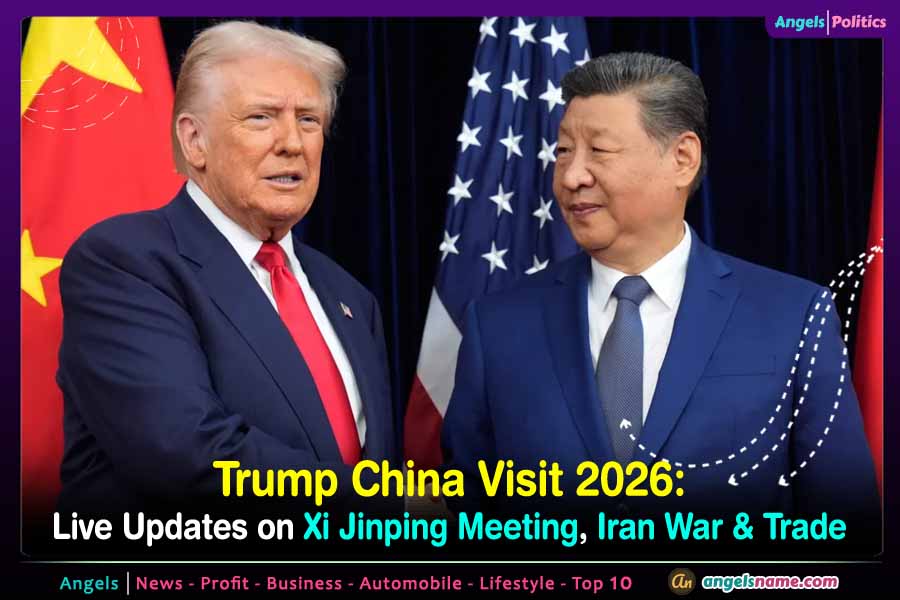
This historic visit marks Trump's first return to China since 2017. As global markets fluctuate, the leaders of the world's two largest economies prepare to tackle heavy-hitting issues including U.S. arms sales to Taiwan, rare-earth export controls, and the escalating energy crisis triggered by the conflict in the Middle East.
As I (Biranchi Narayan) watch these updates unfold, there’s a palpable sense of urgency in the air. Beyond the grand ceremonies and military bands, this meeting represents a desperate attempt to stabilize global trade and navigate a world increasingly fractured by war and economic competition between superpowers.
 Join AngelsName on WhatsApp
1. The Beijing Itinerary and Key Delegates
President Trump was greeted at the airport by Vice President Han Zheng and an elaborate welcome party. The delegation includes high-profile family members and top tech executives looking to "open up" the Chinese market for American innovation.
- Key Visitors: Donald Trump, Eric Trump, Lara Trump
- Tech Giants: Elon Musk (Tesla), Jensen Huang (Nvidia), Tim Cook (Apple)
- Diplomats: Amb. David Perdue, FM Ma Zhaoxu
2. Core Issues on the Table
| Issue Type | Key Conflict Point |
|---|---|
| Middle East | Iran War and Strait of Hormuz blockage |
| Trade | Tariffs on Beans, Beef, and Boeing jets |
| Technology | AI development and Rare-earth exports |
| Security | US arms sales to Taiwan |
Expert Insight: A Superpower Balancing Act
While Trump projects confidence that he can handle the Iran crisis without China, the reality of rising oil prices and a paralyzed Strait of Hormuz suggests otherwise. This summit is less about friendship and more about a strategic truce to prevent global economic collapse before the U.S. mid-term elections.


